
MPP CatalogIt Item Details
Ismail Shammut (1930-2006)
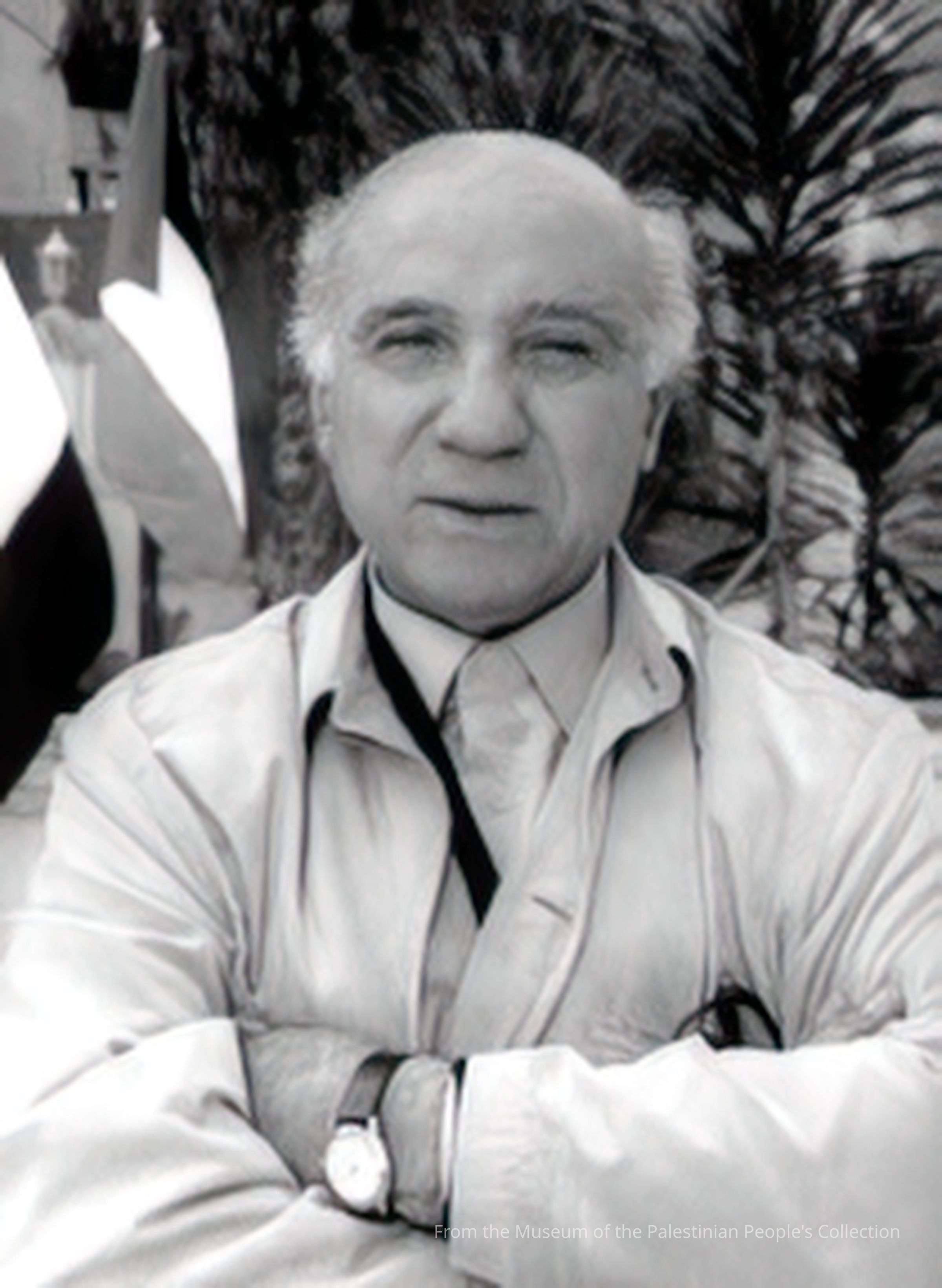
MTM.011
On View
Making Their Mark
Wafa Ghnaim
Images/Bio Sources: https://en.wikipedia.org/wiki/Ismail_Shammout https://www.paljourneys.org/en/biography/9727/ismail-shammut https://artiana.com/Artist/Ismail-Shammout
Historical Note
Ismail Shammut (1930-2006) was a Palestinian artist and art historian. Born in Lydda, Mandatory Palestine, his artistic talents were discovered at an early age. Elementary teacher Dawud Zalatimu taught him how to draw with pencil and ink, paint with watercolors, and sculpt in limestone. Shammut began decorating wedding dresses, soon thereafter opening his own shop which served as his first studio. After the Nakba, Shammut and his family were forced to walk to Ramallah without water; as a result, his younger brother died of thirst. His family eventually settled in Khan Yunis refugee camp in Gaza, and the march Shammut endured to Ramallah is documented in many of his paintings throughout the 1950s, including the famous Where To..? (1953). In Gaza, Shammut taught drawing in refugee schools. In 1950 he joined the Fine Art Academy in Cairo, earning a living by drawing movies posters. Shammut's first exhibition (joint, alongside his brother) came in 1953 at the Employees Club in Gaza City - approximately sixty paintings were presented, and the event is remembered as the first contemporary art exhibition in Palestinian history by a Palestinian artist on Palestinian land. The next year, Shammut held another joint exhibition in Cairo titled The Palestinian Refugee, attended by various Palestinian leaders. He then received a scholarship to study at the Accademia di Belle Arti in Rome, and afterwards moved to work at UNRWA in Beirut. In 1965, Shammut joined the PLO as the Director of Arts and National Culture. In 1969, he and fellow artists founded the first general Union of Palestinian Artists (where he served as secretary-general) and in 1971 he participated in founding the General Union of Arab artists (serving as its first secretary-general). Awards include the Revolutionary Shield for Arts in Literature from the PLO, the Jerusalem Medal for Culture, Arts and Literature, the Palestine Prize for the Arts, and the Creative Prize for Arab Painting from the Arab Thought Forum. Shammut also produced various films, such as Memories and Fire (1973), Urgent Appeal (1973), and On the Road to Palestine (1974). His art is remembered as iconic for Palestinian people, because of its strong symbolism and influence from life in refugee camps.